







Decorative Beams for Exteriors
Decorative beams, soffits and exterior details with a wood look and a facade-ready, weather-resistant finish.
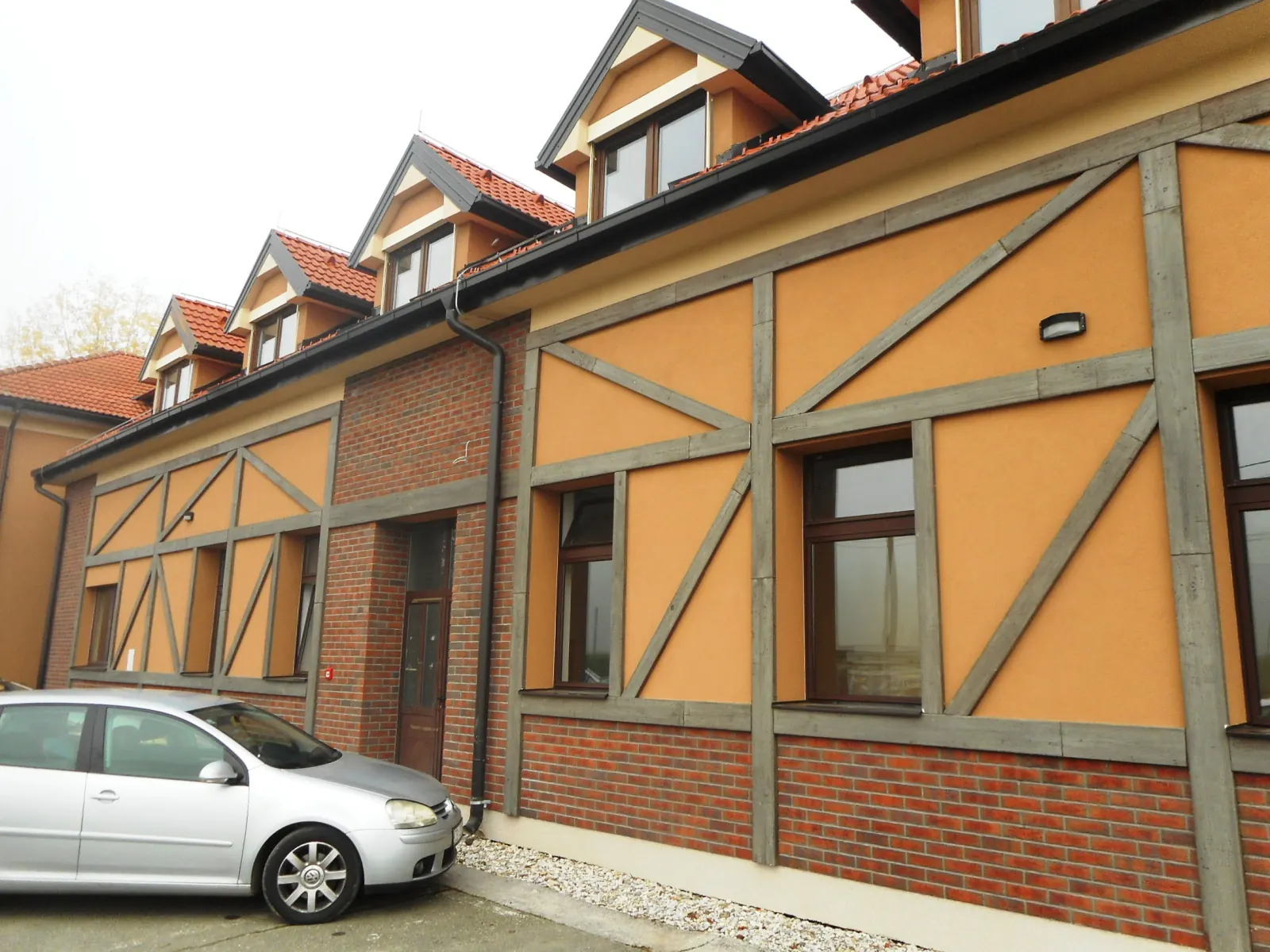
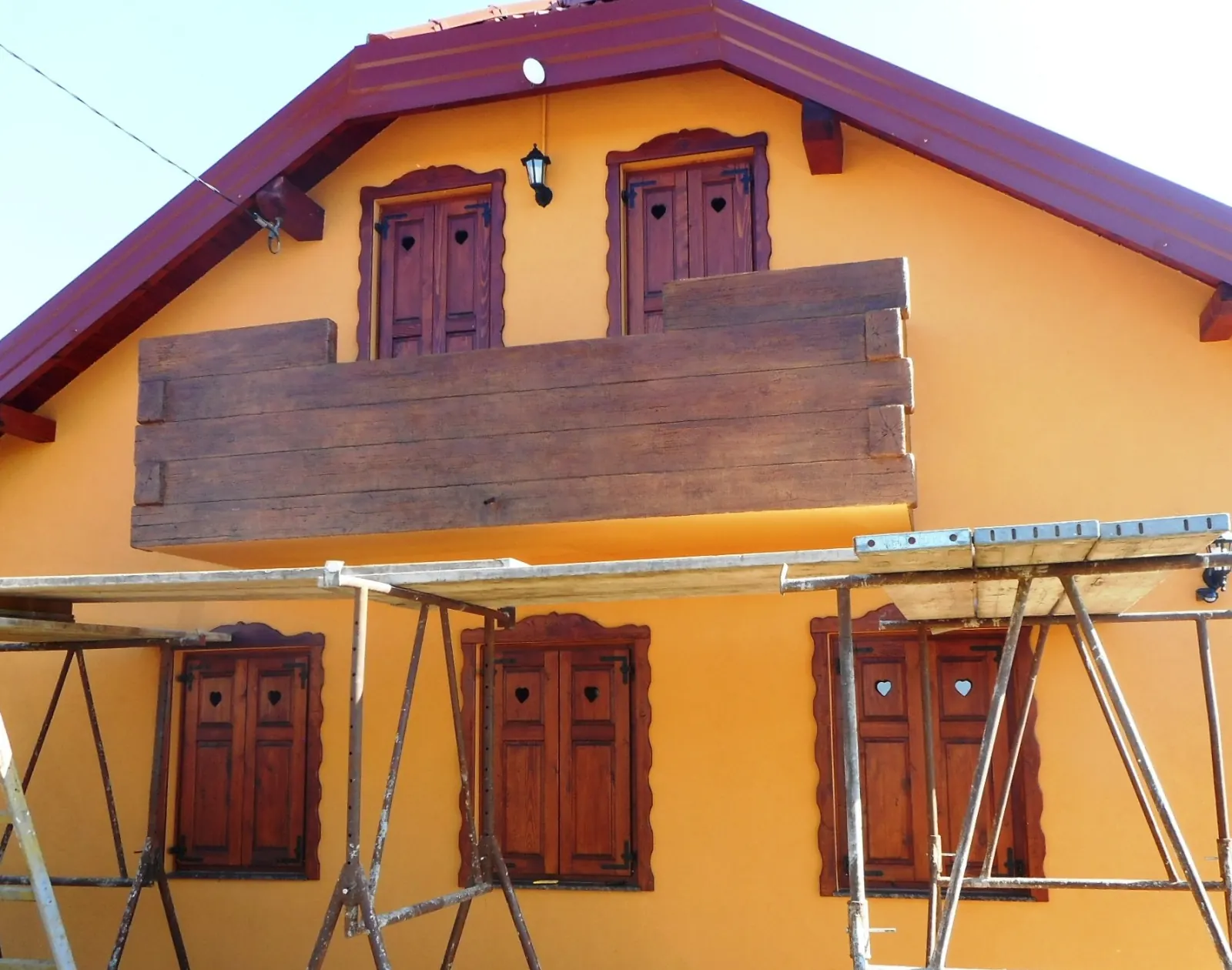
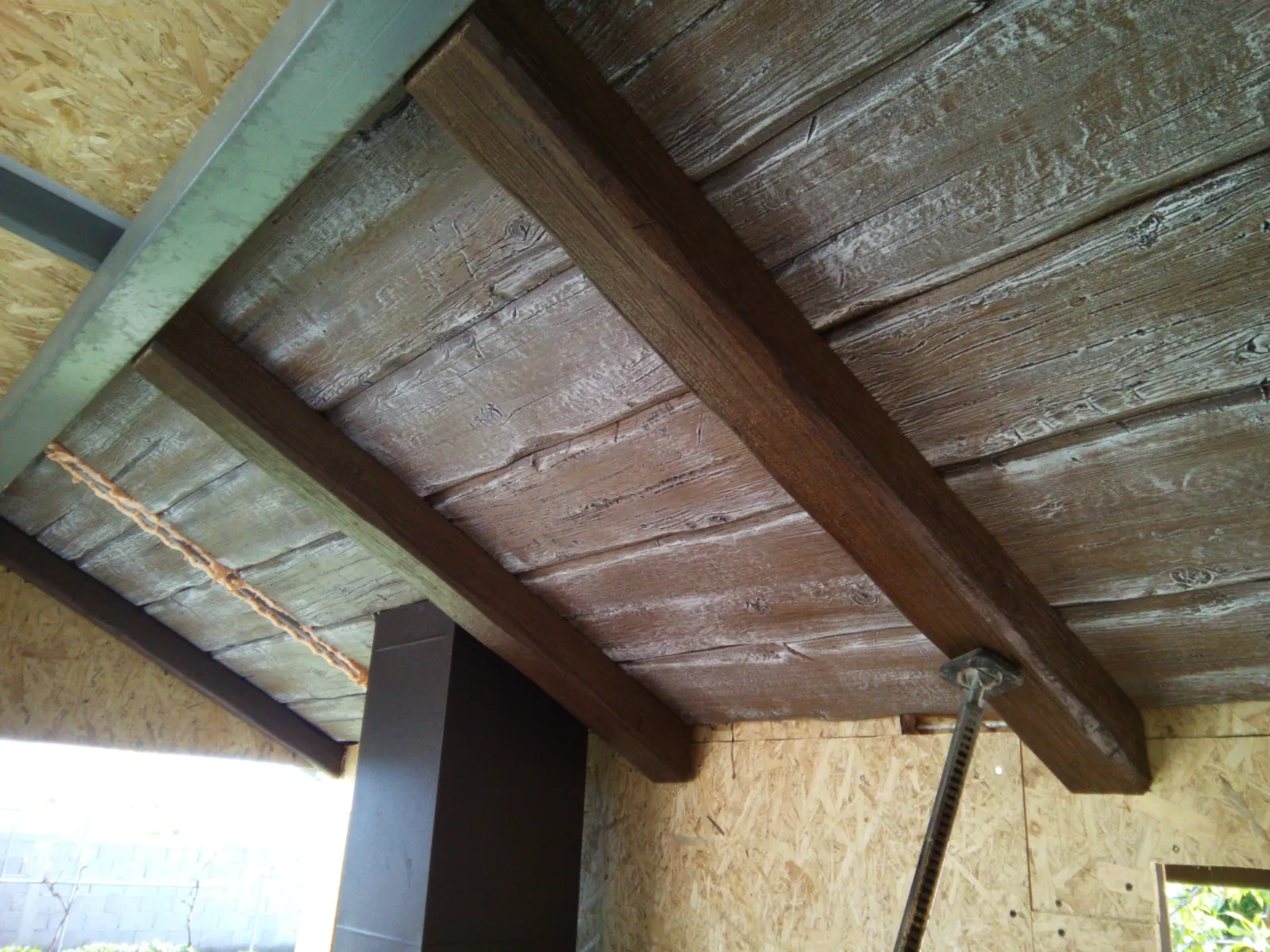
The Look of Wood for Facades, Soffits and Covered Outdoor Spaces
Decorative beams and boards bring the warmth of wood to a building while remaining light enough for facades, soffits, pergolas and covered terraces. Each element is made to the dimensions of the property and protected according to its location and exposure to weather.
Exterior decorative beams and boards are made exclusively to order and sized for each building. They are used on gables, facades, soffits, canopies, pergolas and covered terraces.
The lightweight core does not load an external insulation system like solid timber. Section, length, texture, joint positions and fixing method are determined according to the substrate and the element’s actual exposure.
The material and protective coating are selected for weather exposure, and the finish uses a high-quality UV-stable translucent stain. Upper edges and joints must be detailed so water cannot collect behind the element.
An assessment requires a photograph of the entire facade, measurements of the area, details of the substrate and confirmation of whether the element is fully exposed to sun and rain or located beneath a roof.
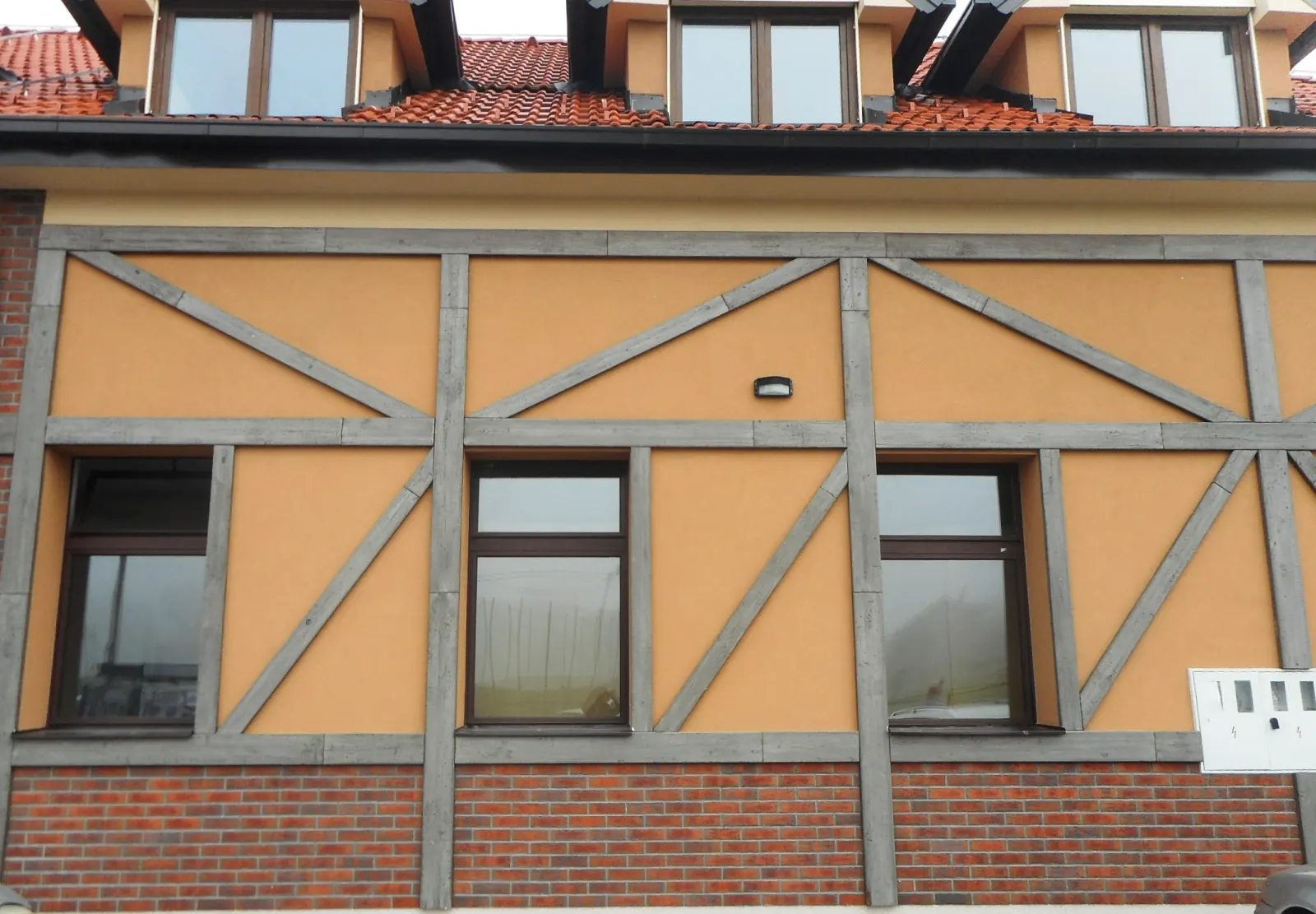
Outdoor Applications
Covered Terraces and Pergolas
Soffits and Canopies
Gables and Decorative Facade Details
For Exterior Use
Protection and Installation of Exterior Beams
An exterior decorative beam must be correctly sized, protected and installed so rainwater cannot enter behind the element.
Send Exact Measurements
State the total lengths, required section, number of pieces, joint positions and any openings or services the element needs to conceal.
Choose an Exterior Finish
Exterior elements need protection suited to sun, rain, moisture and temperature changes.
Prepare a Stable Substrate
The substrate must be clean, dry, load-bearing and suitable for bonding or mechanical fixing appropriate to the size of the element.
Plan Joints and Drip Edges
Top edges, joints and terminations should prevent water from collecting behind a decorative beam or cladding.
Gallery of works
Decorative Wood on Facades and Outdoor Surfaces
Frequently Asked Questions
Frequently asked questions about imitation wood for exteriors
Is imitation wood suitable for the facade?
Yes, imitation wood can be prepared for facade details, soffits, entrances and other outdoor areas. For the exterior, final protection, a stable base and properly solved joints are especially important.
Can wood imitation be placed on a thermal facade?
In many cases, it can, but the method of installation depends on the weight of the element, the substrate, the dimension and the position on the object. With thermal facades, glue, fastening and edge protection should be carefully planned.
How are elements protected from sun and rain?
For external use, the appropriate finish and protection is chosen according to the exposure of the element. It is important to know whether the element is under the canopy, on the southern facade, next to the ground or in a place that is often touched.
Can external elements be made to measure?
Yes. Lengths, sections, texture and tone are adapted to openings, soffits and the architecture of the elevation. Joints and protection of top edges receive particular attention.
How are exterior decorative beams maintained?
The surface should be cleaned periodically and the joints, top edges and protective finish inspected. Renewal intervals depend on exposure to sun, rain and other outdoor conditions.
Are you planning a facade detail with a wood look?
Provide approximate dimensions, the installation location and the desired finish. This allows us to define the section, construction and final coating.
