







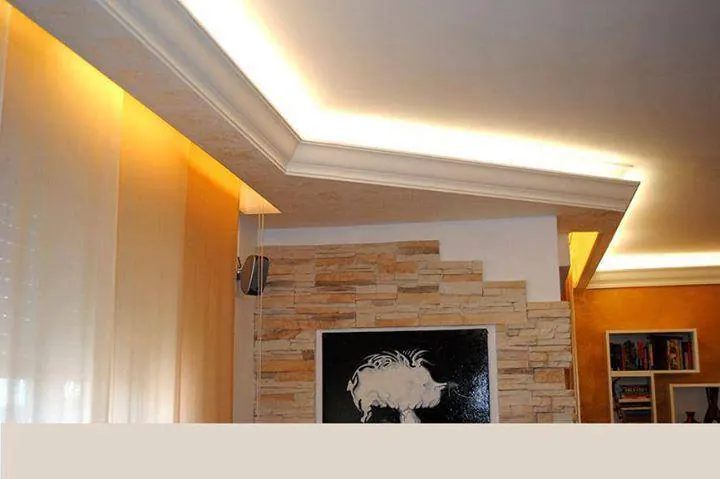
Profiles for indirect LED lighting serve as decorative stucco, shade and technical channel for the LED strip. When they are well chosen, the space gets a soft ambient light without heavy plasterboard interventions.
Before choosing a profile, you need to know where you want to direct the light, how high the room is, where the power supply will be and who is doing the electrical work.
Short answer
- The profile is chosen according to the direction of the light, not only according to the shape.
- LED strips, drivers and connections must be available and properly executed.
- An expert should be hired for the installation of electrical installations.
The direction of the light determines the profile
If you want to illuminate the ceiling, the profile is placed so that it casts light upwards. If you want to emphasize the wall, choose a different angle and distance from the surface.
That is why it is not enough to ask which profile is the most beautiful. You need to know what the light should do in the space: calm the living room, emphasize the wall, hide the curtain or create a discreet corridor of light.
Plan power supply and service
Drivers, connections and cables must be properly and accessible. If everything closes without a plan, later service can be complicated.
Warmth and safety are important
LED lighting is mandatory for such decorative profiles. Light sources that develop high temperature are not used. Electrical work should be performed by a trained and licensed person.
When the profile is used both as a decorative element and as a channel for lighting, safety and orderly execution are as important as appearance.
The light should have a direction
Indirect lighting works best when you first determine what needs to be emphasized: ceiling, wall, niche, curtain or seating area. The profile is then selected according to the light effect, not just according to the shape.
Warm light creates a calmer impression in living rooms, bedrooms and catering areas. The clean line of the profile helps the lighting to look like a part of the interior rather than a technical accessory.
Pleasant effect without overemphasis
The most common mistake is too bright light. Ambient lighting should support the space, soften the shadows and create an atmosphere. When it takes the main role, the space can seem cold or hard.
A good profile hides the light source and leaves a clean line. That is why it fits into living rooms, hallways, apartments, restaurants and lounges where a softer evening atmosphere is desired.
Do you want this effect in your space?
Michelangelo makes custom-made decorative elements for interiors, facades, apartments and business premises. Look at the categories or contact us for a solution that fits your space.
