







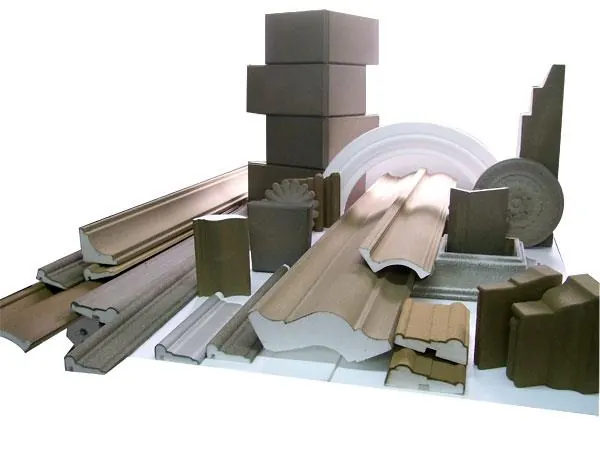
Standard elements are a good choice when they match in size and style. Made-to-measure makes sense when the space requires a special dimension, shape, texture, groove, finish color or a series of elements that cannot be assembled from a catalog.
Short answer
- Standard elements are practical when the dimensions and style already match the space.
- Made-to-measure elements solve atypical measurements, irregular walls and special functions.
- The best choice is often a combination of standard profiles and a few custom details.
When custom makes sense
Made-to-measure is useful when an element must follow an existing detail, hide an installation, fit into an old facade or have a specific texture. The same applies to beams of a special section, 3D coverings and inscriptions.
If the project needs to look as if the element has always been a part of the space, custom execution is often a better way.
The material must follow the purpose
A decorative element is not just a shape. It is important where it is located, how much it is exposed to touch, moisture, sun or daily use. The interior, facade, apartment and catering area require different levels of resistance and finishing.
Well-chosen material facilitates assembly and maintenance. When the decorative element fits into the actual conditions of the room, the result stays tidy for longer.
Assembly details change the final appearance
Edges, joins, finishes and transitions often determine whether an element looks professional. That is why the decorative profile should be viewed as part of the entire surface, and not just as an individual piece.
In the case of more complex shapes, flat joints, a proper base and finishing are particularly important. When these details are in order, the decoration works as part of the project, not as an afterthought.
Do you want this effect in your space?
Michelangelo makes custom-made decorative elements for interiors, facades, apartments and business premises. Look at the categories or contact us for a solution that fits your space.
